RSS

Resources for Self-Publishing Authors

Here’s my growing list of resources for us self-publishers.

Last Update: 04.18.11

Publishing

Marketing

Design

  • 3d-pack.com – free 3D book cover image creator. You have to provide the base images, but it’s nice.
  • pixlr.com – a free online Photoshop-like app
 

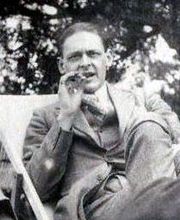
Pensees 03 – T.S. Eliot on Despair

NOTE: This post is part of a series in which I am blogging my way through Blaise Pascal’s book Pensees.

OK, I admit it, I AM going to blog through Pascal’s Pensees. Here’s another interesting quote by T.S. Eliot from the Introduction to Pensees:

His despair, his disillusion, are, however, no illustration of personal weakness; they are perfectly objective, because they are essential moments in the progress of the intellectual soul; and for the type of Pascal they are the analogue of the drought, the dark night, which is an essential stage in the progress of the Christian mystic. A similar despair, when it is arrived at by a diseased character or an impure soul, may issue in the most disastrous consequences though with the most superb manifestations; and thus we get Gulliver’s Travels; but in Pascal we find no such distortion; his despair is in itself more terrible than Swift’s, because our heart tells us that it corresponds exactly to the facts and cannot be dismissed as mental disease; but it was also a despair which was a necessary prelude to, and element in, the joy of faith.

Read the rest of this entry »


Pensees 02 – T.S. Eliot on Christian v. secular logic

NOTE: This post is part of a series in which I am blogging my way through Blaise Pascal’s book Pensees.

Though I am not blogging through Pascal’s Pensees, maybe I should! Here’s another interesting quote by T.S. Eliot from the Introduction to Pensees:

The Christian thinker–and I mean the man who is trying consciously and conscientiously to explain to himself the sequence which culminated in faith, rather than the public apologist–proceeds by rejection and elimination. He finds the world to be so and so; he finds its character inexplicable by any non-religious theory; among religions he finds Christianity, and Catholic Christianity, to account most satisfactorily for the world and especially for the moral world within; and thus, by what Newman calls “powerful and concurrent” reasons, he finds himself inexorably committed to the dogma of the Incarnation….

To the unbeliever, this method seems disingenuous and perverse; for the unbeliever is, as a rule, not so greatly troubled to explain the world to himself, nor so greatly distressed by its disorder; nor is he generally concerned (in modern terms) to “preserve values….The unbeliever starts from the other end, and as likely as not with the question: Is a case of human parthenogenesis credible?

Read the rest of this entry »


Pensees 01 – T. S. Eliot on Skepticism

“For every man who thinks and lives by thought must have his own skepticism, that which stops at the question, that which ends in denial, or that which leads to faith and which is somehow integrated into the faith which transcends it.” ~ T.S. Eliot from the Introduction to Pacal’s Pensees.

Interesting, his description of three outcomes. You could look at this as a process towards faith, or as three separate outcomes. For example:

  • Question > Doubt > Faith

OR

  • Question (agnostic)
  • Question > Doubt (atheist)
  • Question > Faith (believer)

The worst outcome, of course, might be to stop at the question and stay agnostic. Then again, maybe the questions are unanswerable!


Interview: Former Atheist Richard Morgan

At Apologetics315 is the second interview I’ve heard with former atheist Richard Morgan (hear another interview at Unbelievable), and his story is interesting. In the context of this site, what is interesting are the factors that led to his conversion. They seem to be:

  1. Disgust with the hateful rhetoric by his fellow atheists at RichardDawkins.net
  2. The patience and persistence of a pastor who frequented that site answering questions and ignoring insults.
  3. His own experience of suddenly understanding the passage “We love Him because He first loved us (1 John 4:19). More than an understanding, he was surprised to experience divine love at the same time, an experience which he says has continued and deepened since his experience in 2008.

This highlights one of the disconnects between the common path to faith, one of experience first, followed later by intellect (or as Augustine said, ‘faith seeking understanding”), and atheism, which values reason and empiricism first, almost to the exclusion of experience.

Read the rest of this entry »


Why I became an Atheist 07 – Bad reasons for belief (Part IV)

NOTE: This post is part of a series in which I am blogging my way through John Loftus’ book Why I Became an Atheist: A Former Preacher Rejects Christianity.

In Part IPart II, and Part III of this mini-series, I covered the lists of bad reasons for both belief and disbelief from John Loftus’ book. In this post, I’d like to complete the discussion of my own list of bad reasons for belief.

My list of bad reasons to believe include:

  1. Guilt manipulation by preachers
  2. Fear of punishment
  3. Choosing the default belief of one’s family or culture
  4. Secondary benefits of religion like community, education, child training, or social and business contacts
  5. Reaction to abusive secular, atheist, or religious parents or leaders
  6. A response to a near death experience or trauma
  7. Believing the first good argument you hear
  8. Experiencing awe and reverence at creation

Let’s continue discussing the last four items.

Read the rest of this entry »


Why I Became an Atheist 06 – Bad reasons for belief (Part III)

NOTE: This post is part of a series in which I am blogging my way through John Loftus’ book Why I Became an Atheist: A Former Preacher Rejects Christianity.

In Part I and Part II of this mini-series, I covered the lists of bad reasons for both belief and disbelief. In this post, I’d like to discuss my own list of bad reasons for belief.

My list of bad reasons to believe include:

  1. Guilt manipulation by preachers
  2. Fear of punishment
  3. Choosing the default belief of one’s family or culture
  4. Secondary benefits of religion like community, education, child training, or social and business contacts
  5. Reaction to abusive secular, atheist, or religious parents or leaders
  6. A response to a near death experience or trauma
  7. Believing the first good argument you hear
  8. Experiencing awe and reverence at creation

Read the rest of this entry »


Book cover design 04 – the open door

This image still has the watermark from the site I ‘borrowed’ it from – if I use it on my book, of course, I’ll purchase it. This is just a proof of concept. Do you like this better than the others?


Book cover design 03 – the winding road

This is my favorite so far, and since I took the photo, I don’t have to pay for it. It’s also much wider, so I could wrap it around the back… what say ye?


Why I Became an Atheist 05 – Bad reasons for belief (Part II)

NOTE: This post is part of a series in which I am blogging my way through John Loftus’ book Why I Became an Atheist: A Former Preacher Rejects Christianity.

Yesterday, I began evaluating John Loftus’ list of bad reasons for belief. Today, I want to continue that evaluation.  Here’s his list again. Belief…

  1. from the need to be grateful to someone
  2. from the need for a God
  3. from weak intellectual foundations
  4. from the need to be committed
  5. in hopes of personal growth
  6. because of unruly emotions
  7. because of the fear of doubting
  8. believing from not being inquisitive enough
  9. believing from giving up too soon

So, let’s continue from #5…

Read the rest of this entry »